
Finding Plainfield Residents Step by Step
A useful Plainfield residents directory search begins by deciding whether the question is current or historical. For a current address, normalize the postal form, identify the county, then inspect the parcel. For a known person, use only a source whose fields fit the question. Illinois voter verification requires a full name, birth date, ZIP, street number, and street name. It is not a name-only list.
Keep the source role in view. An assessor connects an owner field to a parcel. A Recorder index connects named parties to a filed instrument. A directory or obituary connects a name to a dated publication. None should be stretched into a claim it does not make.
- Check the Village boundary and the Will or Kendall parcel map.
- Record the site address, county, PIN, and source date.
- Use the matching county Recorder or election route.
- Compare one independent official or historical source.
- Ask the custodian for a copy when an index is incomplete.
Plainfield’s Two-County Records Fork
The Village spans Will and Kendall Counties. That split affects deeds, assessment files, court cases, voter administration, jail records, and local vital copies. Use the official Plainfield municipal boundary service to test Village limits, then open the county parcel viewer containing the address. A Plainfield postal label or ZIP does not settle county jurisdiction.
Will County offices are centered in Joliet. Kendall County offices are in Yorkville. If a search fails in one county, recheck the parcel layer, legal description, filing venue, or event location. Annexed land and postal geography can make the wrong portal look plausible.
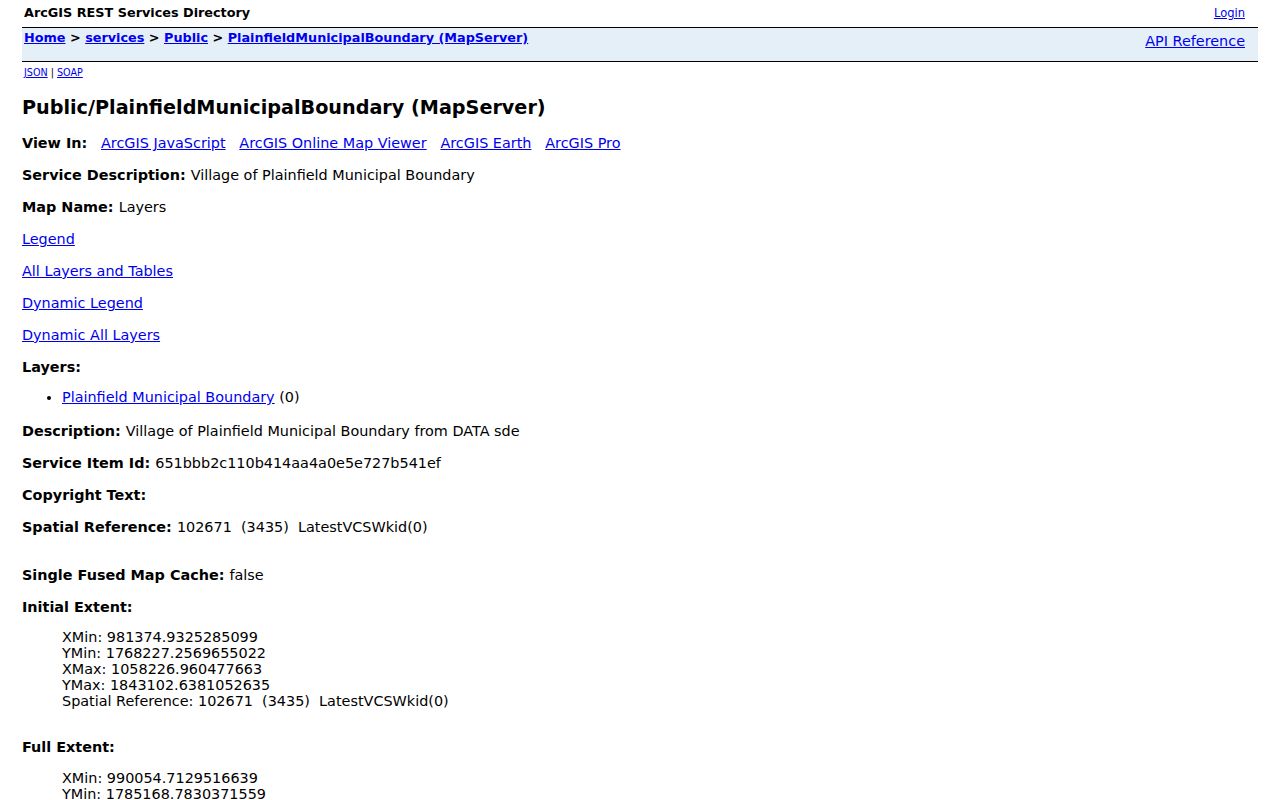
The captured map supplies jurisdiction context, not proof of ownership or occupancy.
Plainfield Residents Records Offices
Recorders keep deeds and plats. Assessment offices maintain parcel, owner, sale, and tax fields. County clerks administer elections and local vital copies. The Village Clerk routes municipal records and Freedom of Information Act requests. Phone first when a fee, coverage date, or public portal has changed.
Plainfield Property Rolls by County
Will County offers separate PIN, address, sales, subdivision, owner, and property-class searches. The address form accepts street number, street name, and city or town. Its address source is Will County 9-1-1, so an address mismatch belongs with that authority rather than a guessed spelling.
Kendall Devnet accepts parcel number, owner, house-number range, street, city, sale price and date ranges, tax code, district, and legal description. It is a current assessment and tax source, not a full deed chain.
| Portal | Inputs | Role |
|---|---|---|
| Will SOA Address | Number, street, city | Address-linked parcel |
| Will SOA PIN | Full or partial PIN | Assessment context |
| Kendall Devnet | PIN, owner, range, street, city | Parcel, tax, sale, legal fields |
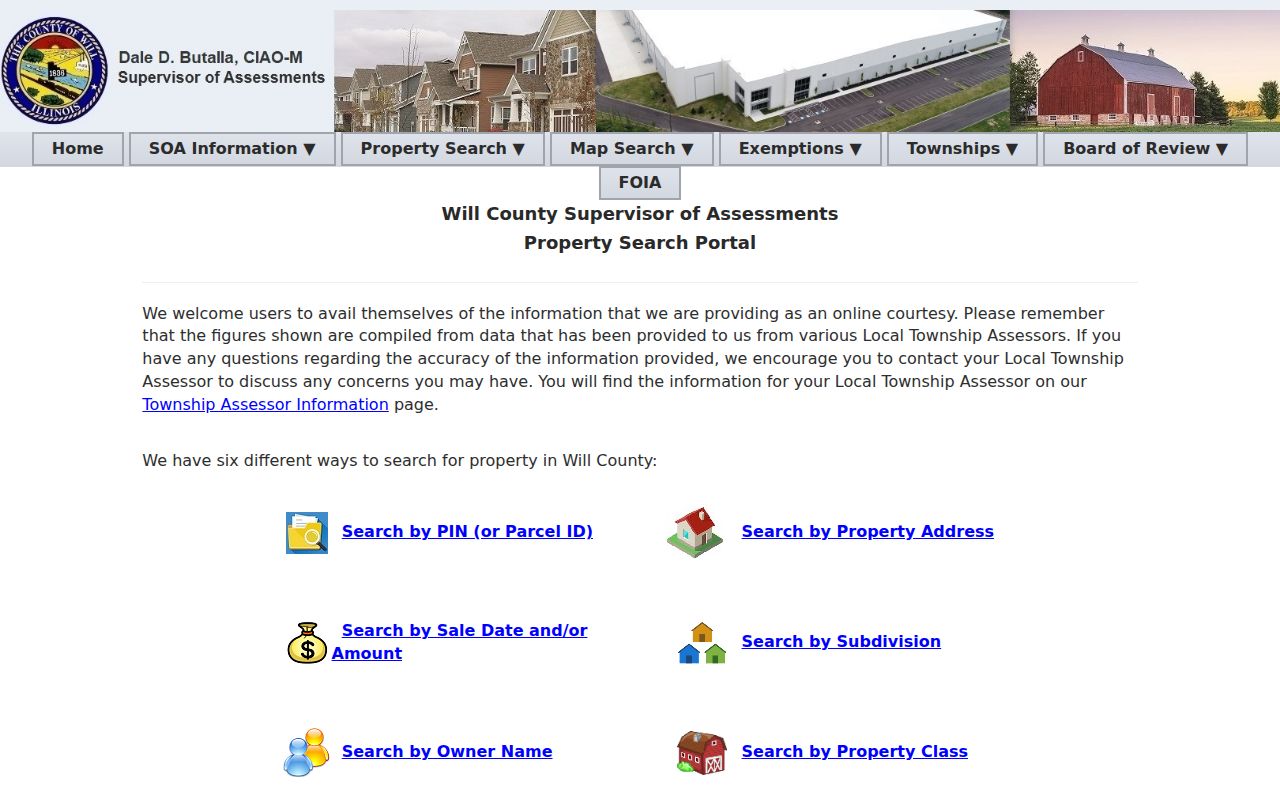
The menu separates broad address, PIN, owner, and sales work.
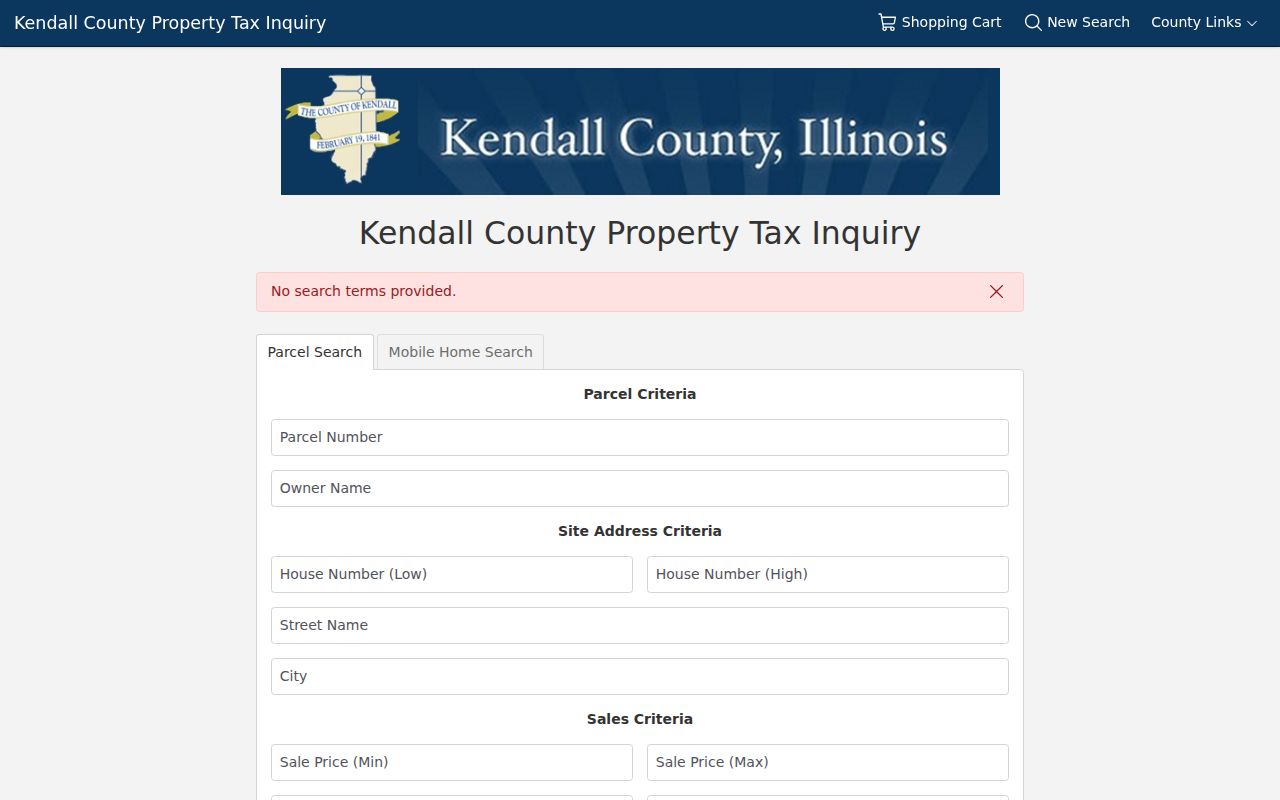
The Kendall form exposes parcel and district filters needed on that side of Plainfield.
Current Plainfield Resident Directory Sources
No office publishes one complete list of everyone in Plainfield. The practical residents directory is a set of narrow official indexes. Each has its own keeper, access route, update cycle, and privacy rule.
| Source | Connection | Access |
|---|---|---|
| Property roll | Parcel, owner, site and mailing fields | Public portals |
| Illinois voter lookup | One known voter and exact address | Exact-field check |
| Recorder index | Parties and instruments | Online and office |
| Circuit Clerk | Party, case, docket route | Web, terminal, copies |
| PAPL history | Dated directory and paper entries | Digital and onsite |
Commercial compiled products mix sources and may hide dates. Official rolls name the custodian and correction route. An index may be free while a certified copy costs money.
Plainfield Voter Lookup Fields
The Illinois State Board form works for one known person at a known address. It requires all six personal and address inputs. The street-name list appears after ZIP entry. No login, payment, or bulk list was observed.
| Field | Format | Use |
|---|---|---|
| First and last name | Alphabetic | Person match |
| Birth date | MM-DD-YYYY | Narrows identity |
| ZIP | Five digits | Loads streets |
| Street number/name | Number plus list | Address match |
Use the Illinois voter lookup. A match does not disclose ballot choices or prove that every person at the address is listed.
Plainfield Deeds and Parcel History
Will Recorder online documents typically cover 1965 to current, while plats reach county inception. Older instruments can be searched at the office or ordered by number. The guide explains name fields, percent wildcards, address format, PINs, and book/page prefixes.
Kendall confirms deeds, mortgages, liens, and plats, but accessible official material did not expose a public land-record URL or cutoff. Its research room is the fallback. Kendall GIS supplies current and retired parcel fields and creating or retiring document numbers. Those are leads, not the instrument.
- Parcel
- A mapped land unit identified by a PIN.
- Index
- A finding list pointing to a record.
- Grantor and grantee
- The parties giving and receiving an interest.
- Criss-cross directory
- A directory arranged by street or phone.
Plainfield Court Records by Venue
Research can lead to Village Branch Court, Will Circuit Clerk, or Kendall Circuit Clerk. Petty traffic and ordinance routing starts with the Village. County filings belong with the correct clerk. Will offers limited web access plus i2File, terminals, physical files, and an archive center. Kendall offers eMagnus, re:SearchIL, I2File, a Viewing Room, mail, and in-person requests. Adoption and juvenile records are not open through its general route.
Review the Will case-search entry.
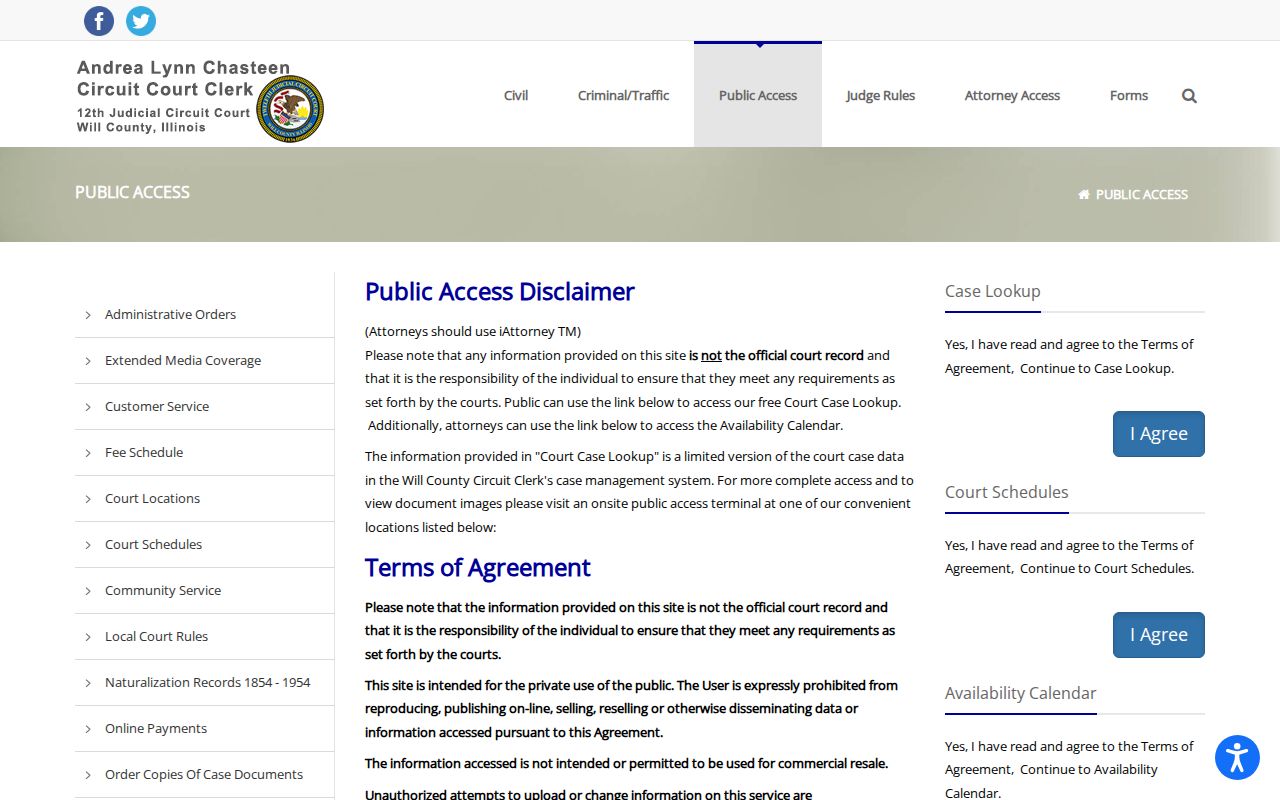
A party or case hit may still require a clerk copy request.
Plainfield Vital Record Routes
Birth, marriage, and death records follow event place and date, not a later address. County clerks issue local certified copies. IDPH handles state birth and death routes and marriage-index verification, but not certified marriage copies. Birth records are restricted. Older genealogy material may be available through Archives, IRAD, or the library after statutory thresholds.
Review IDPH record categories.
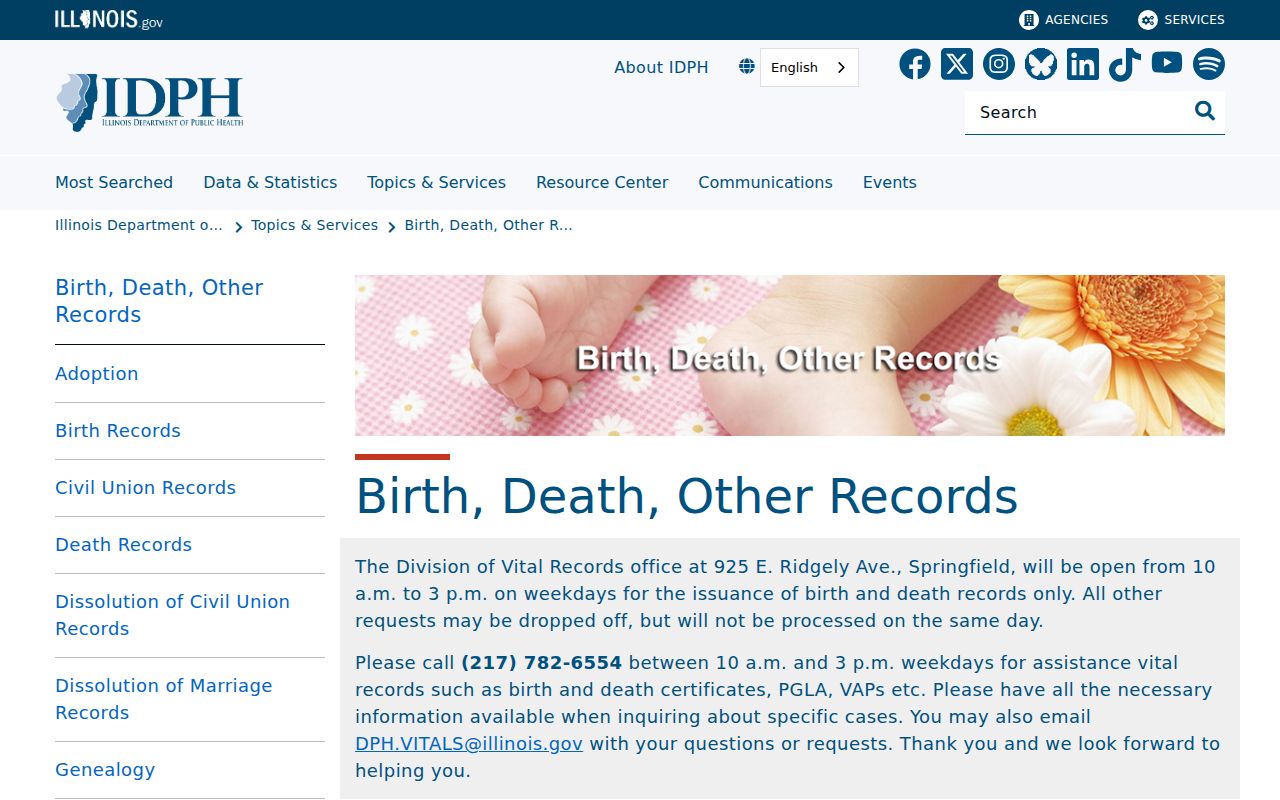
The state route separates record types and eligibility.
Plainfield Municipal Records by FOIA
The Village Clerk routes council, administrative, license, and election-information questions. Plainfield accepts FOIA requests online, by email, mail, and in person. Name the department, record, date range, address or file number, and desired delivery. Illinois FOIA, 5 ILCS 140, has an ordinary five-business-day response baseline with a possible extension.
Planning handles zoning and historic forms. Building and Code Enforcement handles permits and complaints, though a direct public permit URL was not captured. Police Records has separate service and FOIA channels. A narrow request gets to the right custodian faster than a general request for every record about a person.
Historical Plainfield Residents Directory Shelf
PAPL holds Plainfield and Lockport directories from 1973-1993, regional Joliet volumes for selected years and 1966 forward, and phone directories from roughly the mid-1920s through the 1950s. Newberry identifies Plainfield holdings for 1927-1928. Older entries are dated evidence, not current residence.
The collection adds papers, yearbooks, obituaries, cemetery ledgers, atlases, Sanborn maps, census film, and the 1835-1885 Will grantor/grantee indexes. Pairing these helps distinguish occupant from owner. See the Plainfield city directory collection for the full shelf.
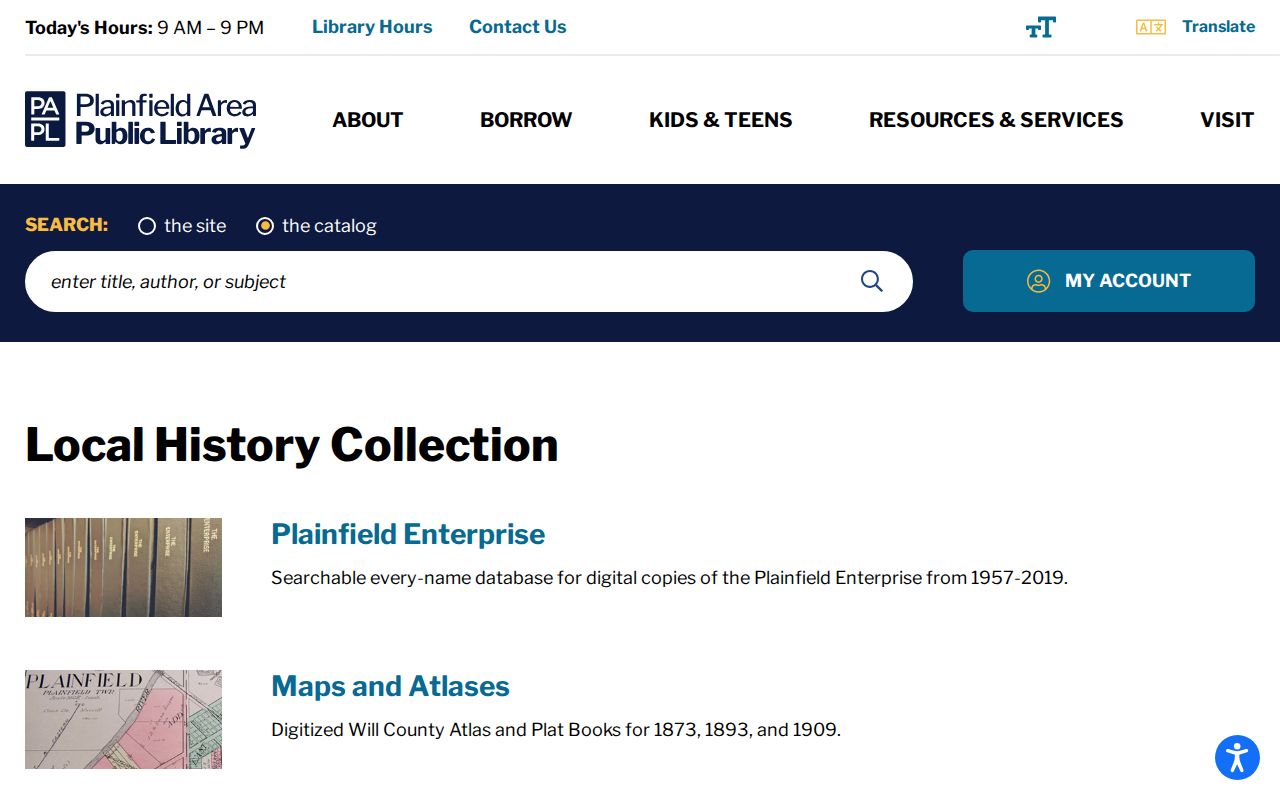
The portal anchors historic names to publications and years.
Plainfield History Leaves Records
Early settlement questions may require atlases, land books, cemetery ledgers, and papers. Downtown addresses connect to the National Register district, Historic Urban Core survey, Sanborn maps, and Recorder books. Later subdivisions appear in assessment portals, plats, permits, zoning, and address layers.
PAPL dates Walkers Grove settlement to 1828 and Village establishment to 1834. Municipal minutes survive for 1897-1915, auditor books for 1898-1908, and township records for 1850-1940. The JP&A interurban, Electric Park, and the 1990 tornado interviews add place context without turning historical names into present residents.
The Downtown Historic District follows Lockport Street between Route 59 and James Street and includes 53 properties. The East Side district covers parts of Amboy Street, Bartlett Avenue, Center Street, Route 59, and Evans Street. These designations point toward preservation files. They do not establish who occupies a property today.
Plainfield Licenses Confirm Narrow Facts
Illinois Secretary of State entity search can show legal name, file number, formation date, jurisdiction, status, registered agent, office, and some officer fields. Search choices include business name, agent, president, secretary, manager, file number, keyword, and partial word. A filing role does not prove a home address.
IDFPR License Lookup covers regulated credentials with type, status, number, business name, DBA, personal name, city, county, and ZIP fields. Live details may include effective and expiration dates. Plainfield also licenses local operations. Pair local and state records only when their roles match.
Plainfield ZIP and Address Limits
Official material identifies 60544, 60585, and 60586 as Plainfield postal references. Census geography also associates nearby ZCTAs with the area, but a ZCTA is a statistical approximation, not a postal delivery boundary. USPS validates mail form, not a resident’s presence.
ZIP cannot select Will or Kendall County. Use the municipal boundary and parcel map for jurisdiction. A ZIP-only match should never become a claim about county, Village limits, a parcel, or a person.
Plainfield Sources Have Different Clocks
Live systems do not share one update date. Will GIS listed Summer 2026 parcels and weekly address and street layers. Kendall Devnet displayed an August 2026 timestamp. IDFPR reports update monthly, I-CASH weekly, and the state registry states daily updates. Historical collections have fixed years but may have incomplete runs.
Record the URL, query, retrieval date, and limit for every Plainfield search. A later reader should know whether a claim came from a live roll, dated index, copy, directory, or map.
Portal dates also shape the fallback. A current assessor page may identify the parcel yet say nothing about the earlier deed. Will Recorder's online instrument run generally begins in 1965, so an older transfer belongs in the Recorder office or a document-number order. Kendall's accessible official material did not state a remote cutoff, making its research room the safer route for an uncertain year. Court indexes can identify a case while leaving the file at a public terminal, archive center, Viewing Room, or copy desk. The same rule applies to Plainfield library holdings: a catalog description proves that a collection exists, but staff help, microfilm, or a reference request may be needed to find the page.
Write down failures too. A challenge screen, broken link, or missing year does not erase the underlying record. Phone, mail, in-person research, and a narrow Illinois Freedom of Information Act request remain valid access channels when the web route fails. This dated method keeps the residents directory useful even as custodians change vendors or add scans.
Plainfield Resident Search Boundaries
Some records stay restricted, sealed, redacted, or purpose-limited. Illinois offers an Address Confidentiality Program. Birth eligibility, juvenile and adoption limits, court sealing, voter-file rules, and protected driver data remain separate safeguards.
Lawful use. Use Plainfield resident records for legitimate personal, civic, family-history, or estate research. Never stalk, harass, threaten, or harm anyone.
A blank result can mean wrong county, alternate spelling, an old street, limited coverage, or portal trouble. Record the search date and ask the custodian before drawing a conclusion.